Thursday, 17 May 2012

Second Life

                          Hyper Reality and Avatar Gaming

_________________________________________________________________________________

Now as an avid gamer I'm quite familiar with on-line worlds and Avatar based gaming.

".. The shift from the real to the hyper real occurs when representation gives way to simulation" -- Mark Nunes, 1995

at the dawn of the computing age this man for-saw the future... and it was was made of polygons! ( textures used to render video games)

Many times in my life I have either been so bored  or so stressed that i have turned to one of the many on-line worlds that exist now and existed when i was younger.

I've always loved the idea of adventuring and as a White young boy in a western society in the 21st century their inst likely to be dragons invading Melbourne.

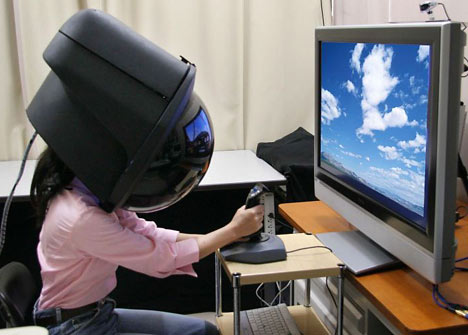
The idea behind avatar gaming is to simulate a real experience, to place yourself or some essence of yourself into an on-line avatar and have it experience worlds and scenarios that we physically could not hope to achieve.

This is delivered with a bombardment of information the experiences and feelings invoked on this virtual plane effective us emotionally in real life.

In an on-line world if something dies, or a friend leaves -- or your account gets banned, or something of any signification occurs  it effects the gamer as a person.
if something bad happens you feel angry -- I can't count the times were something frustrating has happend and i walk away from my computer and realise that I am suddenly filled with a sense of hatred, And I have no idea why or were it came from.

On the contrast accomplishing something in an online environment is as equally as satisfying   as accomplishing something in reality.

While theirs nothing wrong with a media devices inducing emotions some people are no equipped with the right mental attributes for these environments.
These people are those whom attach their self worth to that of their on-line avatar -- creating a symbioses  between the gamer and his avatar, sometimes to unhealthy and even lethal ends

Below are the top 10 Second-Life gaming related deaths


1. The boy jumped out of a 24-story window on December 27, 2004

2. Neglected child dies from suffocating

3. Teenager who committed suicide because of “WoW Addiction”

4. A young girl died after playing World of Warcraft for several consecutive days

5. Lee collapsed to the floor after playing for 50 hours straight

6. A player killed a (real life) fellow player who had stolen his virtual sword.

7. A 28-years-old man from Beijing

8. Death of a Man Unknown to Us

9. The 28-year-old father spent all his waking hours playing online

10. 13-year-old Tianjin boy


now this may seem a silly notion to persons who  Haven't experienced an online environment --- but the characteristic's of friends and enemies  mirrors reality quite precisely.
-- While this may seem silly some of my longest standing friendship exist purely on virtual planes. I have core group of gaming companies who I interact with on a weekly basis whom I have never met or seen

I guess the point I am making is. while their are some extremes to hyper-reality and avatar based gaming the experiences and relationships you can forge from them can -- If handled correctly can form lasting friendships and fond memory


Forrest Welsh


Thursday, 10 May 2012

Mobile Devices


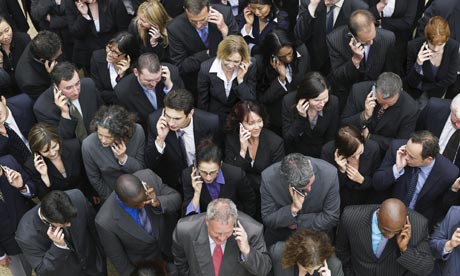
"The mobile phone is primarily accepted as a body part or appendage"
-- Ingrid Richardson 2007

Disturbing times we live in this quote was from a 5 year old paper, interestingly this was the same year the first IPhone was released.
Gone are the days when there was any mystery in the world -- when I was a younger boy I used to worry that my mother had been in a car accident every time she went out. Now, as a 5 year old this is a scary thought. Now to me back then there was no way to prove that she hadn't died.
 I remember waiting outside the front gate for a glance of her car down our long road and the overwhelming relief that flowed coursed through me when I say our big blue car roll up the driveway.
Now days all I would have to do is spend 10 seconds texting her, or tweeting, or face booking, or calling or skyping or 1 of the many ways i can instantly contact her at any point from any location.
This brings me too a second quote

"Is the cell phone undermining the social order?" 
-- Hans Geser 2004

Well Hans you are spot on the money with this one. Again this quote is BEFORE the iPhone people were already noticing the social implications of texting alone.
Now with today’s technology we have access to every type of technological communication in the palm of our hands.

Now Hans Geser had a four pronged theory that suggested that Mobile phones were detrimental and in the following ways;
"Increasing the pervasiveness of primary particularistic social bonds"

Now Geser’s argument for this point is that while landline phone numbers are listed in directories and databases, mobile phone numbers are electively given to peers and family in in this way we narrow our social interactions too shield us from parts of society we do not wish to mingle with.
On this I disagree as when Geser was writing his paper mobile phones were exclusive to text and call based, nowadays our phones are open to a plethora of various open network social media interactions.

However  shielding of unwelcome social interactions is still a relevant angle, Sometimes people shield themselves from welcome social interactions or any social interactions at all, Some people have the uncanny ( and in my opinion annoying) ability to ruin any social interaction both virtual and personal by constantly accessing their smartphone and avoiding actual conversations.

"Reducing the need for time-based scheduling and coordination"
 So true the need for scheduled and personal interactions are long gone, while I am grateful to be able to contact my distant friends at a drop of a hat I do miss the expressiveness and intimacy of a friendship based on mutual interests and regular person to personal social interactions.

"Undermining institutional boundary controls and replacing location based with person based communicative systems"

This is another point I also disagree with.  Geser suggests that our previous model of technological communication prior to mobile phones was built on that idea that we communicated from a house or business place to another house or business place and never directly to an individual. While this can be annoying receiving a call at 6am while you’re laying in bed it can have the unseen benefit round the clock communication without disturbing other members of your house hold or workplace.


"Providing support for anachronistic pervasive roles"

Geser suggests for this point that we are contactable at any time, even if we are already engaged in a prior activity or event he also suggests that we can use mobile phones for monitoring other persons or loved ones.
While there are the benefits of safety and security, and relay of information in cases of emergency. This DOES NOT outweigh the negatives of the complete personal breakdown of social interactions
I can’t count how many times I have had to sit staring into space as someone I’m out to dinner/movies/coffee/train/ playing a board game/cards or any number of other social activities were my peer is texting or calling someone while I wait bored out of my mind and resenting ever moment of it.

To summaries I hate smartphones, I love instant communication but I don’t think society as a whole is or ever will be mature enough to manage or comprehend both personal and technological relationships without one affecting the other in a negative way.


 Gesers paper is avaible on google books.
 P. Glotz, S.Bertscht, C. Locke, 2005 Thumb Culture The meaing of Mobile Phones for society.

http://www.dynamicbusiness.com.au/news/motorists-accident-mobile-phone-1264.html


http://www.guardian.co.uk/business/2010/jan/01/mobile-phones-changed-society


Sunday, 6 May 2012

The Politics of Social Media


Politicians using social media? at first glance someone could wonder at the purpose of such an undertaking


their have been many earlier attempts at utilizing social media for political election purposes -- 
a few brief examples are


John Edwards --  While this man was official the first ever person to announce his candidacy for US presidency via an on-line video, I think the fact that was was not successfully elected took away from the innovative step which he undertook --


Also while this was considered to be one of the first "person to person" addresses as Edwards was addressing his audience directly and not through a mainstream media source, I think that the fuck that it was released on his personal website and not through a 3rd party medium of YouTube or another similar video sharing site, really could have damage the credibility and authenticity of the address.


Mind you I think any video created for exclusive on-line purposes is a risky decision as the internet is a fickle minded machine and can be manipulated accordingly


i.e many videos go through forum based websites such as 4chan.org and Reddit.com now while these audience may not the intended target all it takes is a few persuasive individuals to find or suggest a flaw or problem with their video format and it could potentially be blacklist by a wide segment of an internet community(Note: on the flip side it could have potentionally positive effects)


These points aside 


 Im going to breifly examine to what i consider the start of mainstream poltical social media.


In 2007 Barrack Obama launched his presidential campaign - of which the general purpose is too gather support from potential voters, but his campaign team did one thing different they explore the use's of social networking sites as a basis to create buzz about the campaign and were even able to utilize Facebook to assist with donations towards the champaign. 
The now preisdient Obama was able to advance his campaign by reaching voters whom would otherwise would of been unaware of his political message"


An article on http://knowledge.insead.edu/contents/HowObamausedsocialnetworkingtowin090709.cfm (Scott Goodstein, 2010) qoutes;

"Since joining the Obama campaign in February 2007, Goodstein, who is the External Online Director for Obama For America, has helped attract nearly two million supporters on MySpace, about 6.5 million supporters on Facebook, and 1.7 million supporters on Twitter."


If these numbers are correct this is just over 10million supporters over social media networks considering the population of america this is somewhere between 3-4% of the total population


since the 2007- Barrack Obama campaign politicians utilizing social media sites such as Facebook had become and increasing trend.


It is almost essentially for an politician to have a Facebook page and a twitter page and any other form of social media page as these enables them to reach a younger audience and influence audiences who may not be of voting ages but will be in the near future